

New York is getting scooter sharing — but that won’t solve anything
New York is getting scooter sharing — merely that won't solve annihilation
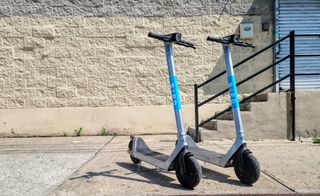
Bird, Lime and VeoRide are releasing 3,000 electric scooters into the East Bronx as part of a pilot program to run across how well scooter-sharing works in New York, a tentative first footstep to approving these services city-wide. It'due south also a chance to bring electric scooters to areas underserved by mass transit in New York before unleashing them on the streets of Williamsburg.
Only while the scooter-sharing goal is certainly an admirable one, all the electric scooters in the globe aren't going to fix the entrenched infrastructure issues in The Bronx or any other U.S. city that'southward been carved upwardly with highways and interstates since the 1950s.
- Best electric scooters
- Best electric bikes
Bird is testing out its scooter-share plan in Co-op City, a evolution of 35 highrise buildings with more 15,000 residential units in The Bronx. Built in the 1960s, Co-op City has around 45,000 residents, the majority of whom are minorities. Information technology'southward bordered on i side by the Hutchinson River; on the other side is I-95, which was constructed in the 1950s, when people started moving out to the suburbs and its motorcar-centered lifestyle.
Like many other minority communities around the country, Co-Op City is cut off from the rest of New York by a highway, isolating its residents, much the aforementioned mode the rest of I-95 split up other neighborhoods in The Bronx — which is merely what Robert Moses, the New York official who fix urban development policies for half-a-century — intended.
There are only two roads that lead in or out of the area; otherwise, you lot have to hop on I-95, something the Bird scooters are definitely not designed for. On the southern end of Co-Op city, a Bird rider would take to travel nearly three-quarters of a mile, from the edge of Baychester Ave. to reach the Gun Hill Route subway station. On the northern end, information technology'south near one-half a mile from the Taco Bell on Tillotson Ave to the Eastchester - Dyre Ave. station. If you're in the middle of Co-op Urban center, the nearest subway station past pes is nearly half-a-mile away, by taking a pedestrian span to the Baychester Ave. station.
It's admirable that Bird and others are attempting to shorten the distance — and go far the good graces of New York Urban center, so they tin expand its scooter-share program to the rest of the city — and more than flush customers. But, even when someone takes i of the few surface roads out of Co-Op Metropolis, they'll be confronted with the fact that their neighborhood isn't the all-time for scooting.
There are very few protected bike lanes in the Due east Bronx, which ways that they'll have to share the route with New York drivers, who aren't known for their all-around demeanor. Moreover, as The Verge notes, some of the protected lanes, such as the Bronx River Parkway, are off-limits to electric scooters.
While the city has said it will add together upward to 30 miles of protected bike lanes by December 2021, one look at the official bike map of New York City makes it manifestly to encounter that the East Bronx, where this pilot program is existence launched, has far fewer bike lanes of whatever sort than Manhattan and more affluent areas of Brooklyn — and none of them stop at any of the stations of the No. 5 subway.
Giving more than people means of getting around is a good thing. But, I'k skeptical this 21st-Century applied science is going to solve a trouble that'south been around for more than 50 years.

Source: https://www.tomsguide.com/news/new-york-is-getting-scooter-sharing-but-that-wont-solve-its-transportation-issues
Posted by: loweinquen.blogspot.com
0 Response to "New York is getting scooter sharing — but that won’t solve anything"
Post a Comment