

Repairing Or Pulling Out Large Dents On Backside Panel On A Jeep Nitro 4x4?
"The rear differential plays a very large role in the working assembly of a car, truck or semi. Nosotros all know that a vehicle works via its engine'due south piston motility which is powered past fuel combustion. But how exactly does the move of the piston or crankshaft convert to the rotational motion of the wheels? Let'southward take a look at the magic of the rear differential and the problems that arise from rear differential dissonance."
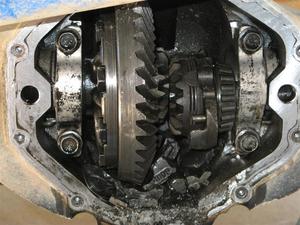 What is the Purpose of a Rear Differential?
The differential is the final end mechanism that enables the creation of torque in the crankshaft before it is distributed through the manual, to the drive shaft, and and then to the wheels. This part serves to transmit engine power to the wheels while likewise enabling them to accept different rotation speeds. This very purpose is the reason backside the name 'differential'—considering it can distribute unlike kinds of speeds to wheels especially during a plow.
The pair of driving wheels in a vehicle does not rotate at the same speed during a turn. In situations similar this, the bicycle on the turning side (inside wheel) rotates slower than its counterpart (exterior bicycle). This is made possible with the help of the rear differential's side gears and spiders. To put it only, this machinery is the one that decides the speed and the frequency of the turning of the beam and wheels in relation to the turning of the drive shaft. This is often referred to ring and pinion ratio. If for example you have a rear gear ratio of iii.73:1, this just ways that the bulldoze shaft (which is connected straight to the pinion gear) is going to rotate 3.73 times to the wheels turning one, full rotation.
What does the Rear Differential exercise?
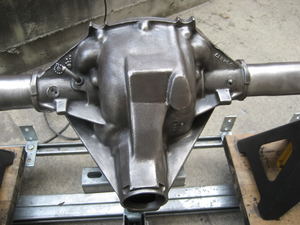 The differential doses the power to the two wheels at the verbal proportions and speed to ensure that stability is kept to the maximum and strain on the drivetrain, differential components and tires is kept at a minimum. Two wheels on a drive beam without a differential in the eye would consequence in both wheels receiving the aforementioned power at all times. Having a differential withal, enables each bike to human action individually.
Why should you care? Well this makes a world of a difference when turning. Just put, the differential allows each cycle to exist independent from the other while yet sending ability to both of them. When i wheel is spinning slower on a adjourn, the mechanism volition go on driving the other wheel without any skidding, bounden or jerking. It the differential would not be nowadays, we would have wheels locked together at the same speed in a turn. This would make turning difficult and with a high probability of losing control.
Besides turning, other issues could ascend from the drivetrain every bit information technology would exist exposed to high forces. What would happen is that i tire would need to grab and slip in lodge to maintain the aforementioned speed as the other ane leading to the transmission of the force through the beam to all its components resulting in a huge strain on axle components and tires that leads to premature wear.
What Are The Symptoms of a Bad Rear Differential?
Rear differentials give out noticeable symptoms once they get-go wearing out or getting damaged. Usually once your differential goes bad y'all might experience any of the post-obit:
- Difficulty in handling
As the differential is the element which helps handle your vehicle in a turn, in one case it starts to wear out, precision is non something that volition exist on your side anymore. The wheels will no exist able to readjust their speeds making the handling of your vehicle quite unpredictable and can lead to an accident. It would be appropriate to get your car to a mechanic equally soon as you sense an event with handling. - Tire harm
Every bit y'all take corners the wheels and tires traveling at the same speed will pb to a premature wear of the inner tires or even damage because the speed will be significantly college than what the inner threads were designed to sustain. - Vibrations
Significant wearable and tear washed to the universal joints of your differential lead to vibration in the drive shaft. This vibration tin be felt more accentuated when you accelerate your vehicle and can lead to fifty-fifty stronger vibrations if differential fluid leak appears. These are early warning signs that the differential needs checking every bit before long every bit possible. - Whining Noises
These are the most common and appear due to lack of lubrication over internal components of the differential. This lack of lubrication can appear cheers to leaking fluids for case and volition inevitably lead to whining noises when that happens. - Gear Grinding
Hearing an increase in the level of humming noises or gear grinding is a way of knowing almost for sure that you have a worn out differential. Commonly the humming gets louder under acceleration. When this occurs it's best to check the condition of your differential and supercede if it'southward in a rough condition.
Rear Differential Racket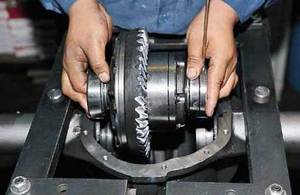
The rear differential is fabricated upwards of many gears with teeth entwined with each other. The effectiveness of its part is dependent on how precise these gears are bundled and oriented relative to each other. If, for example, lubrication runs low on the machinery or the organisation of the gears goes out of identify, rear differential racket occurs. Gear whine, begetting noise and clunking are mutual rear differential noises that should be a concern to vehicle owners.
Rear Differential Noise vs Bike Bearing Noise
Because bearings are incorporated in each wheel and also in differential, most of the times it's very tricky to discover if the the noise that is produced is a rear differential noise or a wheel bearing dissonance.
As a bearing begins to habiliment, friction increases and metal cloth is worn down making ofttimes bad noises until it finally fails. Declining bearings tin make whistle noise or a roaring grinding type of noise. Often the noise get louder as the cars speed or load increases.
As often the noise resonates through the chassis, pinpointing the source of it is very difficult. Thankfully in that location are a few simple things that tin can help distinguish between rear differential noise and wheel bearing noise.
Cycle Bearing NoiseSimplest check to identify a failing wheel bearing is to suspend the machine so that the wheel does non impact the ground. So catch the wheel and wiggle it dorsum & forth. The hub containing the bearing should non let the wheel to wiggle back and forth. If information technology does, chances of having a pocketbook wheel bearing are high.
Rear Differential RacketIf a bearing is failing inside the differential the dissonance is almost the same as the i created past a failing wheel bearing making information technology difficult to isolate. Only difference betwixt a wheel bearing noise and a rear differential noise would be the fact that the wheel begetting noise volition modify with wheel speed but unremarkably will not change with load variations (accelerations/decelerations) while the noise from a rear differential volition change with wheel speed and load.
Failing bearings are not to be played with as they tin cause all-encompassing harm to other components, increasing the repair price significantly.
Differential Noise on acceleration
Experiencing differential noise on acceleration should alert y'all. Usually this happens when after dissimilar circumstances a gear moves a footling inside the differential or the contact pattern was never adjusted perfectly, resulting in a slight noise when the teeth mesh. While the gears turn, teeth slide across each other'southward point of contact and creates the noise you hear.
Continuing to use your car in this circumstances will create a contact pattern that will proceed to expand while the teeth feel abnormal wear.
People talk virtually differential noise on acceleration considering it'due south the most common surface area where noise occurs from on dispatch.
Reason is that the load on the gears makes it harder for the teeth to slide beyond each. This too increases load on the carrier bearings making them decumbent to failure also (and they too go really noisy).
Sometimes this issue evolves into experiencing noise during coasting as well.
Interestingly sometimes differential noise on acceleration appears not because the teeth are misaligned but because the user got stuck and forced the car to go unstuck. Within the differential in that location is a modest axle and spider gears that turn ever and then slowly as you lot accept a corner and one wheel has to rotate a tad slower than the other 1. If yous're stuck and just one wheel is spinning as you try to get unstuck, these footling gears go very hot.
By design they are not seated on any bearing, only surrounded by gear lube. In one case they become hot, the gear lube's lubrication properties are lost.
What happens if rear differential goes out while driving
Depending on the vehicle and the issue the rear differential has, what happens when the rear differential goes out while driving varies in severity.
If you lot take cleaved gear teeth or badly chipped teeth then yous will experience a soft of "skip" in power or vibration that increases with speed. Depending on what teeth are affected you might experience these vibrations at all times (if the chipped tooth is on the pinion or outer ring gears), when turning in either direction (if the broken tooth is on the pinion gears aka spider gears) or merely when turning in ane direction (if at that place's a chipped molar on the axle gears).
If you have multiple broken teeth you'll certainly hear rattle or thunk sounds. Gear teeth tend to break in seats of 2-3 and with every broken tooth the length of the skip and the violence of engagement increase, producing more astringent noise and vibration. This dissonance tin can come off as popping/banging or binding. Drives is advised to pull over in social club to preclude the possibility of loosing control.
Having teeth affected on a single pinion gear may not ruin your differential completely and if defenseless in time you might be able to slowly attain a mechanic shop without a platform. If at that place are more broken teeth on a band or pinion too, then that'southward some other deal. Cleaved teeth on the axle gear tin result in complete loss of power when turning in whatsoever management and somewhen reaching a bespeak where the gears don't engage at all anymore, bringing the car to a complete standstill.
Diagnosing Rear Differential Noise
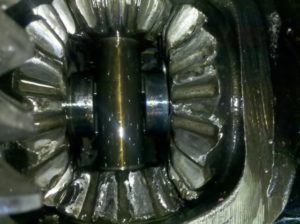 There are various situations which tin can create rear differential noise. For example, howling of gears is a sure sign of wearing. If yous notice that the howling racket merely occurs during deceleration, then it is a good indicator that the pinion-bearing preload has loosened.
Howling under dispatch at various speeds, however, indicates that the gears are already worn out or are out of alignment or depth with each other. If rear differential racket occurs while accelerating the car only at a certain speed, information technology is likely because the gears take become worn due to overloading and lubrication failure. If your gears are newly installed and however create a howling noise, double-check its preload and make sure that the teeth are properly aligned.
Rumbling and whirring noises at speed over 20 mph, moreover, can be the consequence of worn carrier bearings. For vehicles with C-prune axles, the rear differential noise may change at different turns. Generally, worn out pinion bearings can create whirring noises at various speeds, be information technology may during deceleration and/or acceleration. If the pinion bearings are the trouble, they create more than of a whirring racket than a rumble because it turns several times faster than the carrier assembly. Regular clunking every few feet tin also be an indicator of a broken pinion gear and/or chipped and damaged ring gear.
Overly worn out bearings tend to make a howling noise when they do not properly support the gears. Rumbling while turning, on the other hand, is a sign of bad bicycle bearings. Clunking and banging noises on the corners can be due to lack of sufficient posi-traction lubrication, broken spider gears, or worn posi-traction or limited-slip clutches. Broken spider gears, moreover, can too immobilize the differential and create a loud, crunching audio during final departure. If the rear differential noise is characterized by clunking every 2 or three feet, and then there is a peachy gamble that a broken ring gear is the problem with the section with the broken teeth banging or grinding as it tries to appoint the pinion.
Having a chipped or missing high spot on a gear tooth sounds closely like to a broken gear except that the rear differential noise only happens while accelerating or decelerating. This is considering the problem is just present on 1 side of the offending tooth. This rear differential dissonance is described as a heavy clicking type of sound which occurs every eight feet or so. If the pinion is the one that has a high spot, the racket occurs every ii or 3 anxiety and is much more than pronounced because of its higher frequency.
What causes a rear differential to go bad?
Rear differentials ca go bad very fast if they are abused and/or neglected and this tin can happen fifty-fifty in the start miles of a brand new vehicle.
Here is a list of what can cause a rear differential to go bad:
- Non driving fairly in the burglary menses: When a vehicle is brand new, in that location's a period of 3,000-v,000 miles where certain thresholds should not be crossed if the user does not desire to shorten the life of the differential.
In this period only short trips should be made with speeds under 50mph. The pedal should be kept under half-throttle at all times and absolutely no towing or hauling.
All these efforts are essential in order to go on the differential from reaching a high temperature that causes rapid lubrication pause-down - Not changing the first gear lube between iii,000-5,000 miles: This interval is used past most beam manufacturers to mark the end of the break-in menstruum. Oil should be changed and the differential magnet cleaned and inspected carefully to make sure all atomic number 26 particles take been collected and that the magnet is make clean enough to proceed collecting these hard iron particles.
Depending on the quality of the lube you have in your differential from the commencement, you might have to lean towards one or another end of this interval. Loftier performance synthetic hear oils can exist changed at around 4,500-5,000 miles while lesser oils need to exist changed faster. How to know the quality of the oil you're running? Just enquire for the ASTM test functioning data of your oils producer. - Allowing wheel spin:This is a big one as excessive wheel speed can heat upwards the differential in short time. Coupling cycle spin upward with intermittent expert-poor traction creates a deadly cocktail. Intermittent traction like this tin be experienced on sand patches on dry out roads/ snow or ice and information technology causes loftier free energy shock loads when grip is suddenly back. This spike in load can cause harm or fracture internal parts of the differential or drivetrain components similar universal joints.
- Not checking the breather plumbing equipment and breather tube regularly:Checking for leaks, splits or cracks should be done regularly equally these can allow either gradual water intrusion from weather or sudden water intrusion from flooded roads or boat ramps. What happens when the hot differential meets cool h2o is that a vacuum miracle appears that rapidly sucks air or water inside. Gear oils tin can handle air but simply a few on the market tin can handle water contagion and still provide adequate lubrication. Essentially gear oils break down when h2o is added into the mixture.
- Not upgrading the differential comprehend: The differential comprehend should also be upgraded when torque or horsepower is upgraded too every bit when towing a heavy trailer is on the list or towing in steep conditions or when you lot know towing will become regular. Reason backside it is that aftermarket differential covers add together more cooling and rigidity that keeps the differential abroad from flexing under high torque loads and some even allow you to put a sensor inside in gild to track temperature from your dashboard.
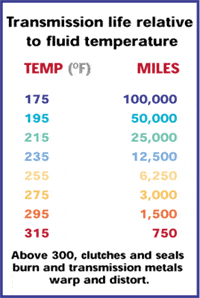 Main thumbnail tip is to always exist careful not to induce large shocks or to heat upwardly the rear differential as either gear teeth or entire segments of the differential tin can exist broken or oil tin suspension down, cause a severe lack of lubrication and totally ruin the associates.
Lubricant life depends a lot on the temperature it reaches. Tests take shown that towing a trailer at 55 mph on a 3.5% grade tin result in temperatures up to 370°F where the lifespan of gear oils is best measured in minutes, not miles.
High shock loads tin damage teeth considering the gears have only and then many teeth and non all come into contact at one given moment. That substantially ways that the entire load spike will end upwardly on but 2-3 teeth at a time. Manufacturers did not create these complex assemblies with such loads in heed.
How Much Does information technology Toll to Replace a Rear Differential?
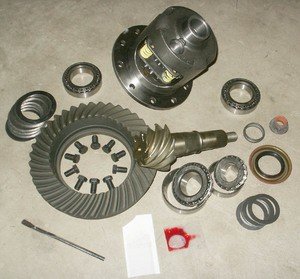 The cost of replacing a rear differential depends on the degree of the repairs that need to be washed. Just a few parts to replace will toll significantly less than lots of parts to replace. This could run the bill up from the $200-$400 range to $600-$800.
Replacing the rear differential entirely costs a whole lot. It depends on the car model and brand and likewise on your preference betwixt salvaged and brand new. You can be looking at anything between $500-$1000 for a salvaged differential with labor included, upwards to $2000-$2500 for a make new one.
Thankfully it is rather hard to damage the differential so desperately that merely a total replacement would fix it. Reason for these prices lays in the complexity and sheer number of components ( multiple oil seals, bearings, pinions and shafts) that come up together to class this ingenious machinery.
Fixing Rear Differential Dissonance
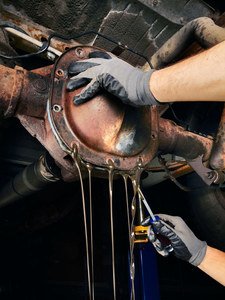 Rear differential noise, when ignored, can lead to major problems and permanent impairment on the ring and pinion. Repair of the differential is usually recommended to be left in the easily of professionals because of the complexity of the arrangement.
Instead, what you lot could do is to boost up the lubrication on the differential instead. Providing proper lubrication levels will also lessen heat and friction and make the movements of gears against each other much smoother and quieter. This is but a preventive step, however, and a replacement of the unabridged machinery is still recommended for those who take been delayed in fixing the problem.
In terms of lubricants, ane very good example is Boost Performance Product's CleanBoost® EMT™ Engine and Metal Treatment. This product is formulated with stabilizing anti-oxidants and special metal deactivators that ensures the polish performance of the engine and gear applications. When applied, the gear oil in the differential carries this Engine and Metal Handling to the asperities of the metals to grade a covalent, galvanic bond on it. It provides 2 to iv micron penetration into the surface, therefore lessening heat and friction and quieting rear differential noise where applicable.
For more information nigh this production, simply head hither.
What Happens When Your Rear Differential Goes Out?
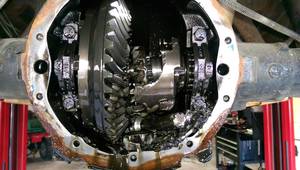 Before a rear differential goes out, information technology starts to give you lot hints in class of sounds or fifty-fifty leaks. Information technology would be best to not leave these signs ignored as each extra mile washed under these circumstances might increase your repair bill in the future.
Differentials are complex mechanical elements and changing a gasket or pinion seal comes with a significantly lower toll than having to rebuild the unabridged differential or swap it out completely. When problems showtime to occur, a howling sound might appear from the rear of your truck while driving. Information technology can be continuous, come and go or even change pitch as information technology all depends on the load on the differential every bit well as the severity of the issue.
Some other symptom y'all could experience while the differential is giving out is that the car can offset to shake or vibrate. Depending on the severity, vibration can become more noticeable as y'all reach higher speeds or if information technology's very astringent, you might experience heavy vibrations nether dispatch from a stop. Leaks are also on this list and would represent the cheapest repair depending on how low the oil level got in the differential.
If for some reason these symptoms go undetected and the differential goes out completely information technology can put your life in serious danger, depending on the context. Your machine can either stop putting ability down to the wheels or have the differential lock up completely. Both these scenarios can potentially make you loose control of the auto depending on the speed y'all are traveling at and road atmospheric condition.

Repairing Or Pulling Out Large Dents On Backside Panel On A Jeep Nitro 4x4?,
Source: https://fuelandfriction.com/weekend-warrior/understanding-rear-differential-noise/
Posted by: loweinquen.blogspot.com
0 Response to "Repairing Or Pulling Out Large Dents On Backside Panel On A Jeep Nitro 4x4?"
Post a Comment